
When planning a building—especially in healthcare, aviation, education, or government—every room matters. Each room must support specific functions, equipment, regulations, and user needs.
That’s where Room Data Sheets (RDS) come in.
Room Data Sheets are more than checklists. They are the building blocks of data-driven design, connecting planning intent to design execution—and ultimately to operational success.
In this article, we’ll explain what Room Data Sheets are, why they matter, and how they enable better, more predictable outcomes in modern building projects.
What Are Room Data Sheets?
A Room Data Sheet is a structured record that defines the functional, spatial, technical, and regulatory requirements of a room.
A typical Room Data Sheet may include:
- Room name and classification
- Area and dimensional requirements
- Functional purpose and adjacencies
- Equipment and furnishings
- Building systems (HVAC, power, medical gases, IT)
- Regulatory and code requirements
- User and operational needs
Traditionally, Room Data Sheets are created in spreadsheets or documents. While familiar, these formats struggle to keep up with the complexity and pace of modern projects.
Why Room Data Sheets Matter
More Than Ever
As buildings become more complex, so do the consequences of poor data management.
Room Data Sheets play a critical role in:
- Aligning stakeholders early around clear, validated requirements
- Reducing rework caused by missing or conflicting room information
- Supporting compliance with clinical, safety, and regulatory standards
- Enabling consistency across hundreds—or thousands—of rooms
When room requirements are unclear, fragmented, or outdated, design teams are forced to make assumptions—often leading to late-stage changes, cost overruns, and compromised functionality.
From Static Documents to
Structured Room Data
One of the biggest challenges with traditional Room Data Sheets is that they are static.
They often live in:
- Spreadsheets
- PDFs
- Word documents
- Email attachments
This leads to:
- Multiple versions of the “same” room
- Manual updates that don’t scale
- No clear ownership of data
- Limited ability to validate or audit requirements
Modern projects require structured, centralized room data—data that can be updated once and reliably used everywhere.
Room Data Sheets as the Backbone of Data-Driven Design
Data-driven design means making planning and design decisions based on validated requirements—not assumptions.
When Room Data Sheets are structured and centrally managed, they can:
- Act as a single source of truth for room requirements
- Be reused across projects and programs
- Support early validation against design models
- Enable measurable compliance throughout the project lifecycle
Instead of reacting to issues late in design, teams can proactively identify gaps, conflicts, or deviations early—when changes are faster and less costly.
The Role of Room Data in
BIM and Digital Workflows
Room Data Sheets are increasingly connected to BIM and digital design workflows.
When room data is structured:
- Designers reference approved requirements directly
- BIM models can be checked against room requirements
- Changes are tracked and audited over time
- Owners gain visibility into whether designs meet their standards
This connection between room intent and design execution is essential for predictable outcomes—especially in regulated environments like healthcare.
Download a Room Data Sheet example here
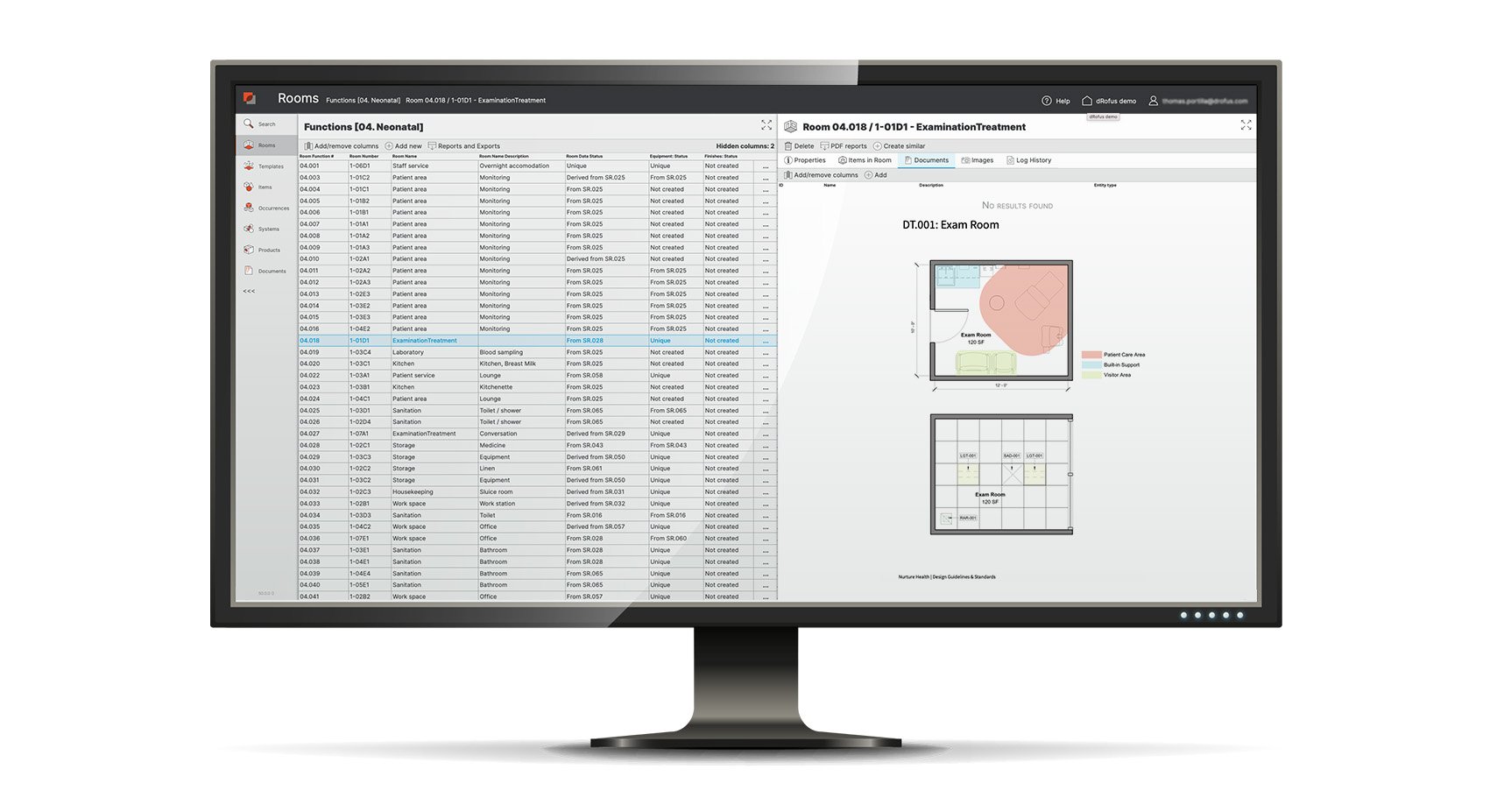
dRofus Room Data Sheets: Turning Requirements into Actionable Data
dRofus Room Data Sheets are designed to move beyond static documentation and transform room requirements into structured, validated data that supports the entire building lifecycle.
With dRofus, Room Data Sheets:
- Are centrally managed and version-controlled
- Capture functional, technical, regulatory, and equipment requirements in one place
- Can be standardized and reused across projects and portfolios
- Remain intact from early planning through design, construction, and handover
Instead of relying on disconnected spreadsheets or documents, teams work from a shared, structured source of truth—ensuring room requirements are clearly defined, consistently applied, and verifiable throughout the project.
This approach enables:
- Better coordination between owners, planners, and designers
- Early validation of design decisions
- Reduced risk of missing or non-compliant room requirements
- Greater predictability across complex building programs
Why Owners Are Re-Thinking
Room Data Sheets
For building owners, Room Data Sheets are no longer just a design deliverable—they are a strategic asset.
Well-managed room data allows owners to:
- Define standards once and enforce them everywhere
- Compare rooms across projects and facilities
- Reduce reliance on institutional knowledge
- Preserve planning intent throughout the building lifecycle
As organizations move toward lifecycle and portfolio thinking, structured room data becomes essential—not optional.
Key Takeaway: Better Room Data Leads to Better Buildings
Room Data Sheets sit at the intersection of planning, design, and operations. When treated as structured data instead of static documents, they unlock the full potential of data-driven design.
Projects that invest in clear, validated, and connected room data experience:
- Fewer surprises
- Better stakeholder alignment
- Improved design quality
- Greater confidence in outcomes
Ready to Learn More?
If you’re looking to improve how room requirements are defined, managed, and validated across your projects, dRofus can help.
Learn how dRofus Room Data Sheets support data-driven design and better building outcomes. Book an obligation-free demo today!
