

The Problem
Healthcare organizations that lack structured facility standards face project delays, cost overruns, inconsistent care environments, and increased operational risk.
The solution is not simply “having standards,” but implementing them as a managed, system-wide, data-driven framework.
The most common root cause is fragmented or inconsistently applied requirements.
When standards are:
-
Stored in spreadsheets, PDFs, or disconnected templates
-
Interpreted differently by each consultant
-
Not enforced across projects
Organizations experience:
-
Rework due to misaligned expectations
-
Duplicate or incompatible equipment purchases
-
Inconsistent room layouts across facilities
-
Increased compliance and operational risk
Over time, these small inconsistencies compound into system-wide inefficiency and cost overrun risks.
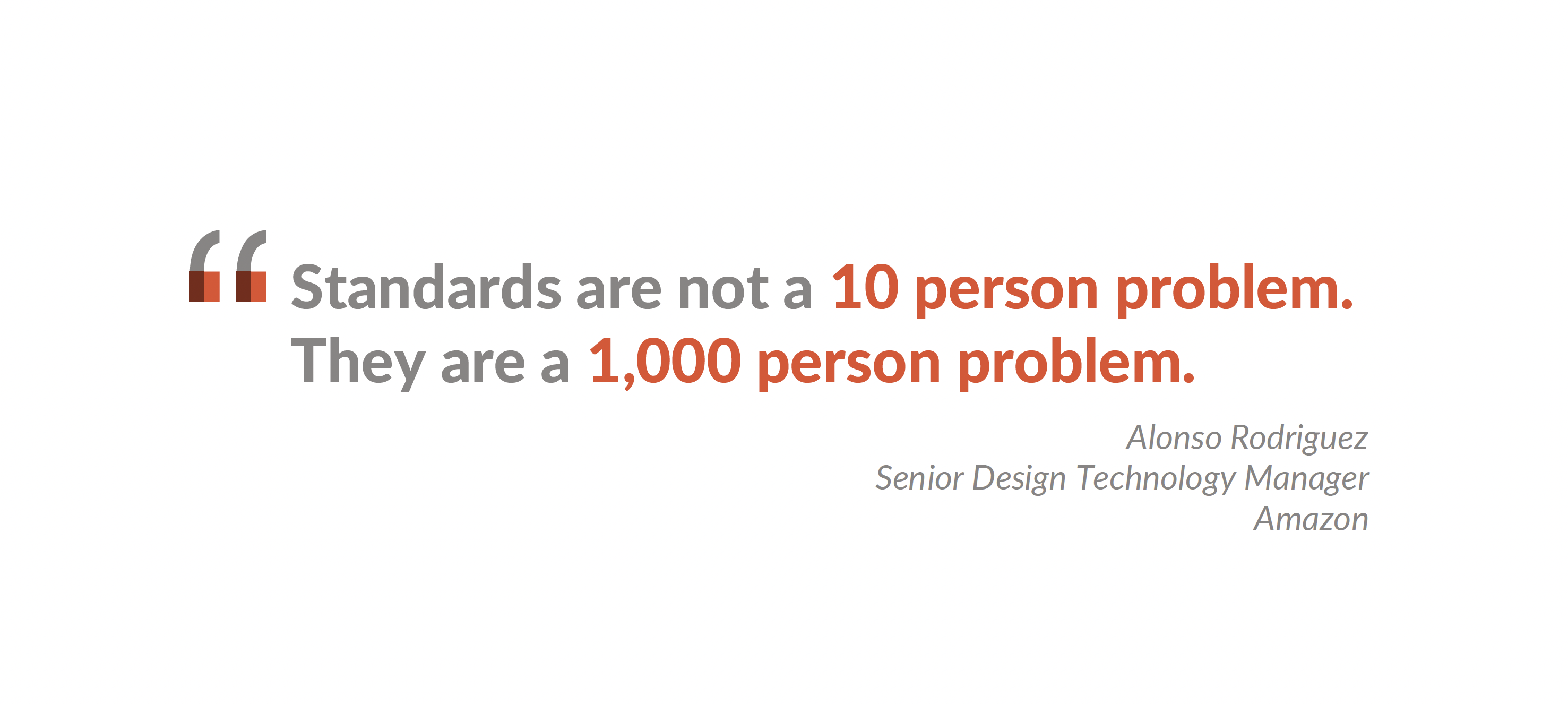
What Are the Benefits of Implementing Standards for Facility Planning?
Organizations that implement structured, enforceable standards see measurable improvements across five key areas.
-
Project delivery accelerates because standardized requirements eliminate ambiguity early, teams operate from validated requirements rather than open questions, resulting in fewer design revisions, reduced RFIs, and shorter design cycles.
-
Project costs decrease when consistent, centralized standards allow equipment to be consolidated across projects, procurement to become predictable, and redundant purchases to be eliminated.
-
Clinical and operational outcomes improve directly: standardized room layouts reduce staff variability, familiar environments shorten training time, and configurations lower patient fall rates and reduce hospital-acquired conditions.
-
Consistency enables scalability: rather than starting from scratch on every new project, organizations build on validated knowledge, enabling portfolio-level planning, repeatable facility models, and faster expansion across sites.
-
Structured standards preserve institutional knowledge by capturing decision logic and documenting best practices in a system rather than in people's heads, ensuring that expertise scales across the organization rather than disappearing with staff turnover.
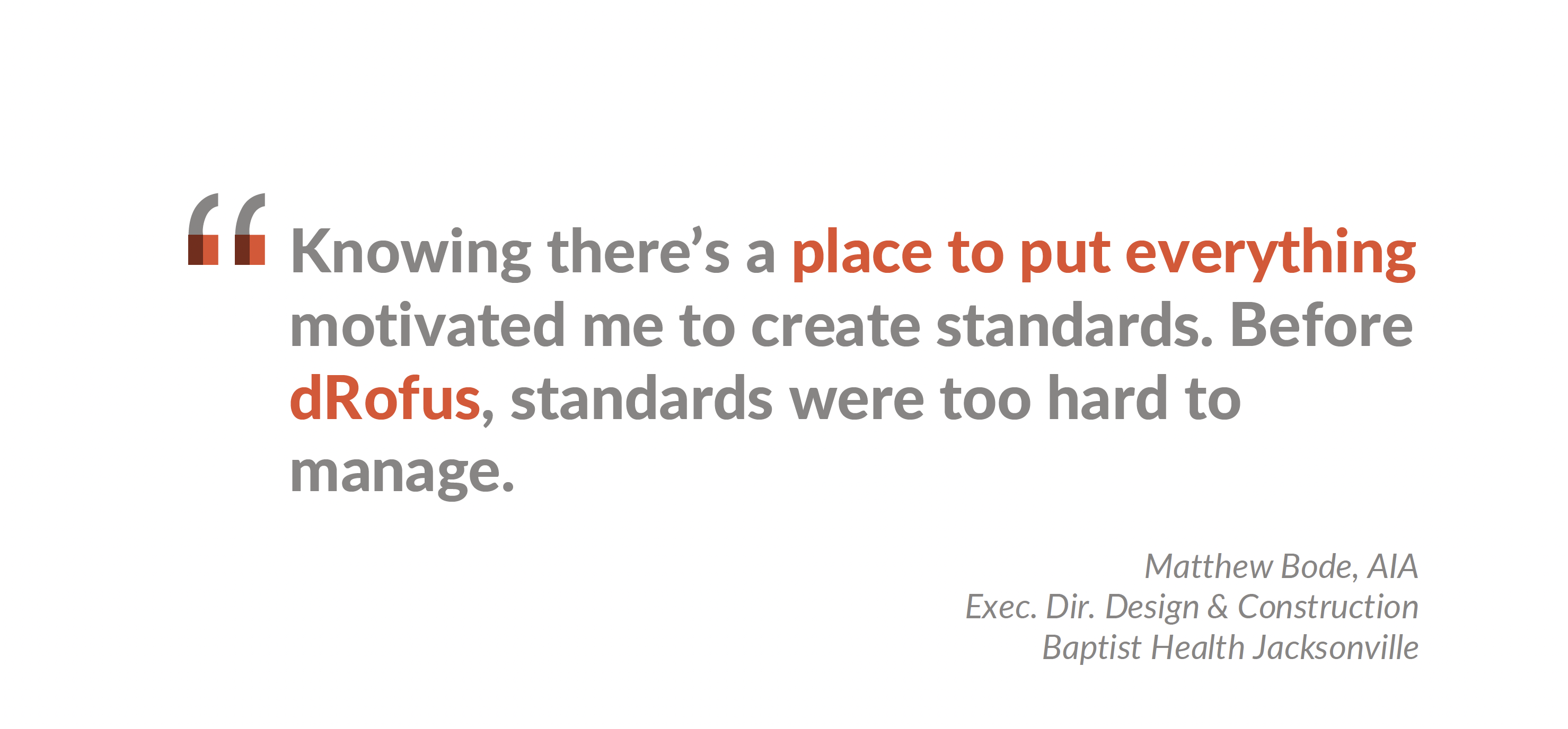
What Do “Healthcare Facility Standards” Actually Include?
A complete framework typically includes four categories:
- Codes and Regulations: These are the non-negotiables consolidating minimum program, space, risk assessment, infection prevention, architectural detail, surface, and building system requirements in one document.
- Facility Standards: These are organization-owned and the most powerful differentiator between high-performing and reactive health systems. They include your standard room templates (e.g., exam room configurations, inpatient room layouts), preferred equipment manufacturers and model numbers, spatial adjacency requirements, and department-level planning criteria.
- Best Practices: These emerge from industry research and evidence-based design. They cover areas such as sight line design from nurse stations to reduce staff fatigue, hand hygiene access placement to prevent hospital-acquired infections, and workflow-driven department layouts. Unlike codes, best practices aren't mandated, but organizations that ignore them tend to discover the cost of that decision in clinical outcomes and operational inefficiency.
- Design Language: Often the most underinvested category, design language defines what your facilities look and feel like, materials palettes, lighting standards, wayfinding systems, furniture collections, and spatial character. It is the standard that patients and staff experience most directly. A consistent design language enables patients to recognize and trust your facilities across sites, and allows staff to orient quickly when transferring between locations.
Only codes are enforced externally, the rest define your organization’s identity and performance.
Why Do Most Standardization Efforts Fail?
Because standards are not managed as structured data.
Common failure points:
- Static documents that cannot be updated at scale
- No connection to design tools or workflows
- No governance or version control
This leads to:
- Standards drifting over time
- Inconsistent adoption
- Limited real-world impact
How Structured Data Solves This Problem
When standards are managed as structured data:
-
Requirements are centralized and searchable
-
Updates propagate across all projects
-
Data connects to BIM and planning tools
-
Compliance becomes measurable and enforceable
Instead of static documents, standards become:
-
A living system of validated requirements

How to Start Implementing Facility Standards
A practical approach:
-
Map stakeholders and workflows
-
Define a clear standards framework
-
Start with high-impact areas (e.g., room types or equipment)
-
Implement governance and update processes
-
Embed standards into tools and workflows
Most importantly:
Treat standardization as change management, not just documentation.
How dRofus Supports Structured Facility Standards
dRofus enables organizations to:
- Centralize all room, equipment, and planning requirements
- Standardize templates across projects and facilities
- Connect requirements directly to BIM and design workflows
- Track compliance and validate requirements in real time
- Preserve institutional knowledge across the building lifecycle
This transforms standards from static documents to enforceable, scalable data.
Bottom Line
Healthcare facility planning doesn’t struggle because of a lack of standards. The challenge exists when those standards are fragmented, inconsistent and not operationalized. When standards are structured, governed, and embedded into workflows, organizations gain predictable project outcomes, lower costs, safer, more consistent care environments, and scalable growth across their portfolio.
Want to Assess Your Current Standards Approach?
Benchmark your organization’s maturity and identify gaps in your standards strategy.